We Use CookiesWe use cookies to enhance the security, performance, functionality and for analytical and promotional activities. By continuing to browse this site you are agreeing to our privacy policy

10 Best Drones 2026 in the United States
How do we rank products for you?

Our technology thoroughly searches through the online shopping world, reviewing hundreds of sites. We then process and analyze this information, updating in real-time to bring you the latest top-rated products. This way, you always get the best and most current options available.

headphones-stars

Our Top Picks

#1

Winner

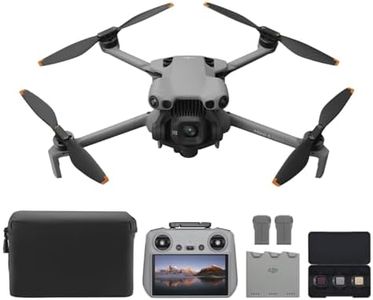
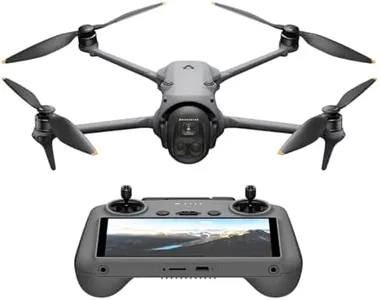
DJI Mini 5 Pro Fly More Combo Plus with DJI RC 2, Drone with Camera, 1-Inch CMOS, 4K Drone for Beginners, Obstacle Sensing, ActiveTrack 360°, 225° Gimbal Rotation, Extended Battery Life

Rating
10.0
Chosen by1,325
Control Method
Flight Time

Most important from
619 reviews

Control Method
Effortless to control, making flying a truly enjoyable experience.
Flight Time
Impressive flight endurance that supports extended aerial sessions.

The DJI Mini 5 Pro Fly More Combo Plus is a compact, lightweight drone that's great for beginners and those wanting high-quality aerial footage. It features a large 1-inch camera sensor capturing sharp 4K videos at 60 frames per second with vibrant colors, making it excellent for detailed and smooth recordings. Its 50-megapixel photo capability also stands out for impressive still shots. Flight time is strong, offering up to 52 minutes per battery, which is above average and means longer sessions before needing to recharge. The included three batteries and fast charging hub add convenience for extended flying.

The drone’s portability is a clear strength — it folds small enough to fit in your pocket or the included shoulder bag, perfect for travel. DJI has packed in advanced safety features: omnidirectional obstacle avoidance uses forward LiDAR and vision sensors, improving safety even at night, while the upgraded ActiveTrack 360° helps the drone follow moving subjects smoothly and reliably. Control is user-friendly with the included DJI RC 2 remote, designed for responsive handling.

Users should note that the DJI Fly app must be downloaded directly from DJI's site due to Google Play removal, which could be a minor hassle. While the drone excels in many areas, the 249-gram weight may limit wind resistance compared to heavier models, though it helps with portability. This drone suits hobbyists and beginners who want advanced camera features and smart flight capabilities packed into a very portable design.

Rating
10.0
Chosen by1,325
Control Method
Flight Time

Most important from
619 reviews

Control Method
Effortless to control, making flying a truly enjoyable experience.
Flight Time
Impressive flight endurance that supports extended aerial sessions.
#2

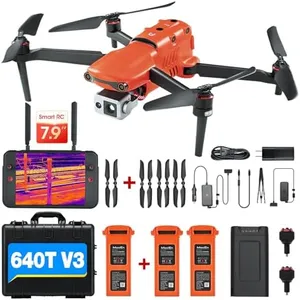
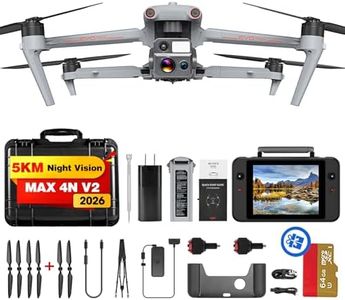
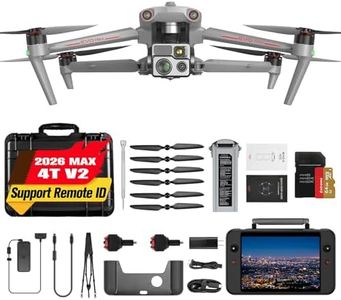
Autel Robotics EVO MAX 4T V2, Visiable/ Zoom/ Thermal/ L-aser 4 Cameras in One, 48MP&1/2" CMOS 8K Camera, 1-160x Super Zoom, 640×512 Thermal Resolution, 16.4–3737 ft L-aser Range, ABX41-D Intelligent Battery In-place Detection, A-Mesh 1.0, 720° No Blind Spot, 42 Min, SkyLink 3.0 for 20KM Transmission

The Autel Robotics EVO MAX 4T V2 is a highly capable drone designed especially for professionals needing versatile and reliable aerial data capture. One of its standout features is the impressive camera setup: it has four cameras in one, including a wide-angle 48MP sensor, an 8K zoom camera with up to 160x zoom, a thermal camera for heat detection, and a precise laser rangefinder. This makes it useful for various tasks such as inspections, search and rescue, or firefighting.

Flight time is excellent, offering up to 42 minutes on a single battery, which is above average compared to many drones in this category. The maximum control range reaches about 12.4 miles (20 km), supported by the advanced SkyLink 3.0 transmission system, providing clear, low-latency video feed during flights. Stability and navigation are strong points here, thanks to a unique 720-degree obstacle avoidance system combining radar and vision sensors, helping the drone detect very small objects and avoid crashes even in low light or bad weather. It also has robust anti-interference tech to keep it flying safely near challenging environments like power lines.

Control is mainly via a dedicated smart controller included in the bundle, which enhances ease of use and reliability over standard app-only control methods. The drone is quite portable for its class and protected against dust and light rain (IP43 rating), though it weighs over 20 pounds, which might be heavy for casual users. The complexity and advanced features may have a steeper learning curve for beginners, and the price and weight suggest it’s more suitable for serious users or professionals rather than hobbyists. Data security is well covered with encryption and local data access, which is important for sensitive operations. The EVO MAX 4T V2 is best suited for professional users who need a versatile, rugged drone with top-notch imaging, long flight duration, and excellent safety features, while casual users might find it powerful but somewhat complex and heavy for everyday fun flying.

#3

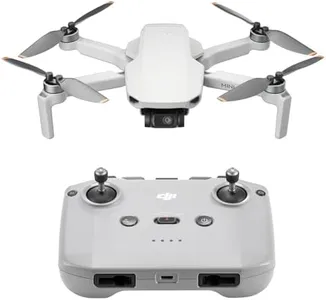
DJI Mini 3, Drones with Camera for Adults 4K, 38-min Flight Time, up to 32800ft (10km) Video Transmission, True Vertical Shooting, GPS Auto Return Integrated, Mini Drone with Camera for Beginners

Rating
8.8
Stability and GPS
Camera Quality
Range

Most important from
5940 reviews

Stability and GPS
The drone offers remarkably stable hovering and intuitive controls, making it ideal for beginners and hobbyists.
Camera Quality
Video and photo quality are outstanding, delivering smooth, professional-looking footage that impresses even first-time pilots.
Range
The return-to-home feature provides reliable peace of mind when flying at extended distances.
Flight Time
Battery life supports up to around 30 minutes of flight, which is good but may require additional batteries for longer sessions.
Portability
The drone’s compact size and solid build make it easy to carry anywhere without sacrificing performance.

The DJI Mini 3 is a compact and lightweight drone, weighing just under 249 grams, which means it doesn't require FAA registration for recreational flying in the US—great for beginners or casual users. It boasts impressive camera quality with 4K UHD video and 48 MP stills, plus a 3-axis gimbal that helps keep footage stable even in windy conditions. One standout feature is True Vertical Shooting, perfect for capturing content optimized for social media.

The drone offers up to 38 minutes of flight time per battery charge, which is quite generous and can be extended with an additional battery (though that adds weight). Its range of up to 10 km (about 6.2 miles) allows for exploring wide areas, supported by reliable GPS for precise hovering and automatic return home to keep your drone safe. Control is intuitive via the included remote, and the option to quickly transfer videos to your phone over Wi-Fi adds convenience.

The Mini 3 lacks dedicated obstacle avoidance sensors, so flying requires more careful maneuvering especially in complex environments. It is designed with beginners in mind, featuring easy takeoff, landing, and in-app flight tutorials. Though not the cheapest option, its combination of portability, image quality, and user-friendly features makes it an excellent choice for adults looking to start aerial photography or simply enjoy flying a high-quality drone.

Rating
8.8
Stability and GPS
Camera Quality
Range

Most important from
5940 reviews

Stability and GPS
The drone offers remarkably stable hovering and intuitive controls, making it ideal for beginners and hobbyists.
Camera Quality
Video and photo quality are outstanding, delivering smooth, professional-looking footage that impresses even first-time pilots.
Range
The return-to-home feature provides reliable peace of mind when flying at extended distances.
Flight Time
Battery life supports up to around 30 minutes of flight, which is good but may require additional batteries for longer sessions.
Portability
The drone’s compact size and solid build make it easy to carry anywhere without sacrificing performance.

Buying Guide for the Best Drones

Choosing the right drone can be exciting but also a bit overwhelming given the wide variety of options available. Before buying a drone, think about why you want one—is it for photography, racing, learning to fly, or maybe just for fun? The answer will guide you towards certain types and features. Read up on local rules and regulations for drone use, as some places have specific laws you must follow. Most importantly, don’t be tempted by the flashiest features if you won’t use them; focus on specs that match your actual uses and skill level.
Camera QualityCamera quality refers to the ability of the drone’s built-in camera to capture images and videos. This is often measured in megapixels for photos and resolution (like 1080p or 4K) for video. If you want crisp aerial photos or smooth video footage, look for higher numbers, but remember that higher resolution footage takes up more space. For casual fun, a simple HD camera is enough. For budding filmmakers, aim for at least 4K video. Your needs—whether for documentation, social media, or professional work—should decide how much camera quality matters.
Flight TimeFlight time is the maximum amount of time a drone can stay airborne on a single battery charge. Entry-level drones might offer around 5-10 minutes, mid-range ones about 20-30 minutes, and advanced drones even more. If you mainly want short flights in your backyard, lower flight time is fine. For those wanting to film or explore further, longer flight time means more uninterrupted use, so it becomes much more important. Consider how often you are willing to recharge or swap batteries based on your expected usage.
RangeRange tells you how far the drone can fly from its controller while staying connected. Short-range drones might fly only 50-100 meters away, while others go several kilometers. Indoor use or small parks don’t need much range, but for outdoor exploration or aerial photography of wide areas, a longer range is valuable. Think about where you expect to fly and if you’ll ever really need to go far, since extra range sometimes means spending more on technological features you might not use.
Stability and GPSStability and GPS help keep the drone steady in the air and let it automatically return to its takeoff spot if needed. Entry-level drones may not have GPS and rely more on manual control, making them harder to fly in wind. More advanced models use GPS and sensors to hover accurately and perform features like follow-me or return-to-home. If you’re a beginner, GPS-assisted stability makes flying far easier and gives peace of mind. Choose this feature if you want an easier, safer flying experience.
Control MethodThe control method is how you pilot the drone—commonly via a dedicated remote, a smartphone app, or sometimes both. Physical remotes offer more precise control, while apps are portable and user-friendly. Some drones also allow for automation or gesture control. Beginners might prefer the simplicity of a smartphone app, while more serious users or those flying at greater distances will benefit from a dedicated remote. Think about what feels most comfortable and practical for you.
PortabilityPortability refers to how easy it is to carry the drone around, including its size, weight, and whether it folds up. If you plan to travel a lot with your drone or take it on hikes, a lightweight, foldable model is best. Bigger drones tend to have more features but are bulkier and may need special cases. Match your drone’s size with how and where you plan to use it.
Obstacle AvoidanceObstacle avoidance uses built-in sensors to detect and dodge things like trees or walls while flying. This feature helps prevent crashes, especially for new pilots or those flying in complex environments. Basic drones might lack this, while higher-end ones have sensors on several sides. If you’re nervous about collisions, or plan to fly in areas with lots of obstacles, choose a drone with at least some obstacle avoidance capabilities.

FAQ